
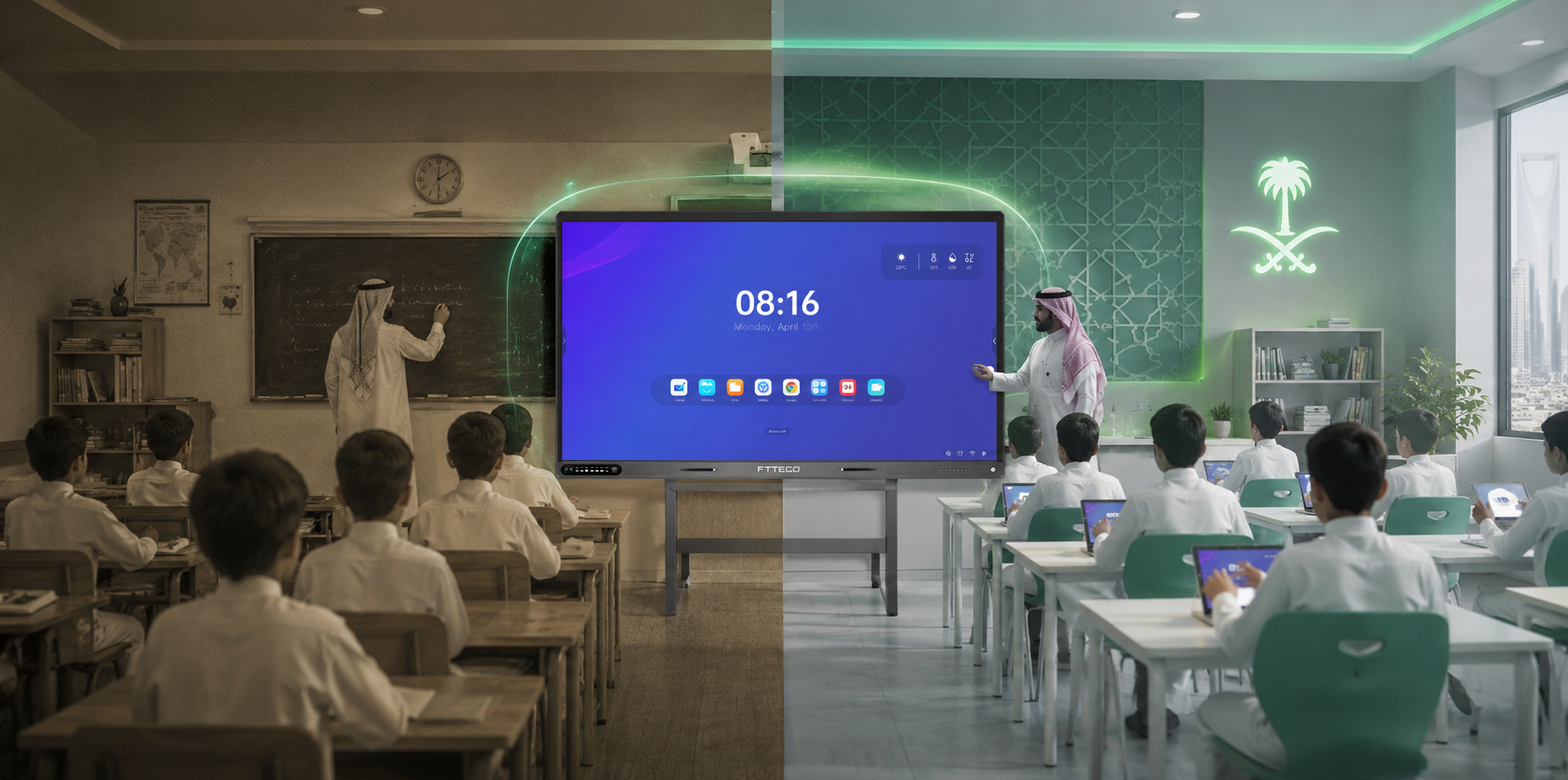
The Difference Between Smart Classrooms and Traditional Classrooms: How Interactive Displays Are Transforming Education
As digital transformation continues to reshape the education sector, schools and universities are seeking more effective ways to enhance learning experiences and improve student engagement. While many institutions still rely on traditional teaching methods, others are investing in smart classroom technologies that support interactive, collaborative, and technology-driven learning environments.
One of the most significant technologies driving this transformation is Interactive Displays, which have become a cornerstone of modern smart classrooms. But what exactly distinguishes a smart classroom from a traditional classroom, and how do interactive displays contribute to better educational outcomes?
What Is a Traditional Classroom?
A traditional classroom is the conventional educational model that relies primarily on textbooks, printed materials, and standard whiteboards or chalkboards. In this environment, the teacher serves as the primary source of information, while students typically assume a more passive role focused on listening, note-taking, and completing assignments.
Although traditional classrooms have supported education for decades, they often provide limited opportunities for collaboration, real-time interaction, and multimedia-based learning experiences.
As educational expectations evolve, schools are increasingly exploring technologies that create more engaging and flexible learning environments.
What Is a Smart Classroom?
A smart classroom is a technology-enhanced learning environment designed to improve teaching effectiveness, student engagement, and collaboration. It combines digital tools, connected devices, and interactive technologies to create a more dynamic educational experience.
Common components of a smart classroom include:
- Interactive Displays
- Learning Management Systems (LMS)
- Educational applications and digital content
- Collaboration and presentation tools
- Hybrid and remote learning technologies
Rather than simply receiving information, students actively participate in lessons through interactive activities, multimedia content, and collaborative learning experiences.
The Difference Between Smart Classrooms and Traditional Classrooms
Content Delivery Methods
Traditional classrooms typically rely on textbooks, printed materials, and whiteboards to deliver lessons. While effective in many situations, these methods can limit the ability to present complex concepts visually.
In contrast, smart classrooms use Interactive Displays to present videos, animations, simulations, and digital learning resources that help students better understand difficult topics and retain information more effectively.
Student Engagement and Participation
One of the most significant differences between the two models is the level of student engagement.
In traditional classrooms, participation is often limited to answering questions or completing written exercises. Smart classrooms encourage active involvement through interactive activities, collaborative problem-solving, and real-time participation using digital tools.
Interactive Displays allow multiple students to engage directly with lesson content, making learning more immersive and collaborative.
The Teacher's Role
In traditional environments, teachers are often responsible for delivering information in a lecture-based format.
Smart classrooms shift the teacher’s role toward facilitating learning experiences, guiding discussions, encouraging exploration, and helping students interact with digital resources and collaborative activities.
Access to Learning Resources
Traditional classrooms typically depend on a limited number of educational resources available within the classroom.
Smart classrooms provide instant access to digital libraries, online learning platforms, educational videos, cloud-based content, and interactive applications, giving students and teachers a broader range of learning opportunities.
Support for Hybrid Learning
Traditional classrooms can struggle to accommodate remote or hybrid learning models.
Smart classrooms, however, are designed to support both in-person and remote participants through integrated communication technologies, interactive content sharing, and collaborative learning tools.
This flexibility enables institutions to maintain educational continuity regardless of location.
How Interactive Displays Support Smart Classrooms
Interactive Displays play a central role in modern smart classrooms because they combine presentation, collaboration, communication, and content management into a single platform.
These displays help educators:
- Present educational content in high resolution.
- Deliver interactive lessons and activities.
- Encourage student participation and collaboration.
- Access educational applications and digital resources.
- Support hybrid learning and virtual instruction.
- Simplify lesson management and classroom workflows.
By bringing together multiple teaching tools in one solution, Interactive Displays help create more engaging and efficient learning environments.
Why Have Smart Classrooms Become a Strategic Investment?
For many educational institutions, investing in smart classroom technology is not simply about purchasing new equipment. It is about improving educational quality, increasing student engagement, and preparing learners for a technology-driven future.
Modern learning environments increasingly require:
- Greater collaboration.
- Digital literacy development.
- Flexible teaching methods.
- Access to interactive educational resources.
- Support for blended and hybrid learning.
Interactive Displays help schools achieve these goals while supporting long-term digital transformation initiatives.
Benefits of Interactive Displays in Education
Educational institutions that implement Interactive Displays often experience several advantages, including:
Improved Student Engagement
Interactive content captures students’ attention and encourages active participation throughout lessons.
Enhanced Collaboration
Students can work together on projects, presentations, and problem-solving activities directly on the display.
Better Content Visualization
High-resolution visuals, videos, and educational simulations help simplify complex concepts and improve comprehension.
More Efficient Lesson Delivery
Teachers can integrate multiple teaching resources into a single lesson without switching between different devices or platforms.
Support for Future-Ready Learning
Interactive Displays help prepare students for modern digital environments by incorporating technology into everyday learning experiences.
Frequently Asked Questions
What is the main difference between a smart classroom and a traditional classroom?
A smart classroom uses digital technologies and interactive tools to enhance learning experiences, while a traditional classroom relies primarily on conventional teaching methods such as textbooks and whiteboards.
Why are Interactive Displays important in smart classrooms?
Interactive Displays improve engagement, collaboration, lesson delivery, and access to digital educational resources, making them one of the most valuable tools in modern learning environments.
Can a traditional classroom be transformed into a smart classroom?
Yes. Many institutions begin by introducing Interactive Displays and digital learning tools before gradually expanding their smart classroom infrastructure.
Are Interactive Displays suitable for all educational levels?
Yes. Interactive Displays can be effectively used in primary schools, secondary schools, universities, training centers, and corporate learning environments.
Do Interactive Displays support hybrid learning?
Absolutely. Interactive Displays can support remote collaboration, virtual lessons, and hybrid learning models through integrated communication and presentation capabilities.
Conclusion
The transition from traditional classrooms to smart classrooms represents a significant step toward improving educational quality and student engagement. While traditional teaching methods continue to play an important role, modern educational institutions increasingly recognize the value of technology-driven learning environments.
Interactive Displays have become one of the most influential technologies in this transformation, enabling educators to create more engaging, collaborative, and effective learning experiences.
As schools and universities continue their digital transformation journeys, investing in smart classroom technologies and Interactive Displays can help create future-ready learning environments that better serve both educators and students.